Motor
5. Engine
The motor is crucial to the machine's performance and precision. High-quality motors ensure smooth and quiet needle movement, which is essential for precise and consistent results.

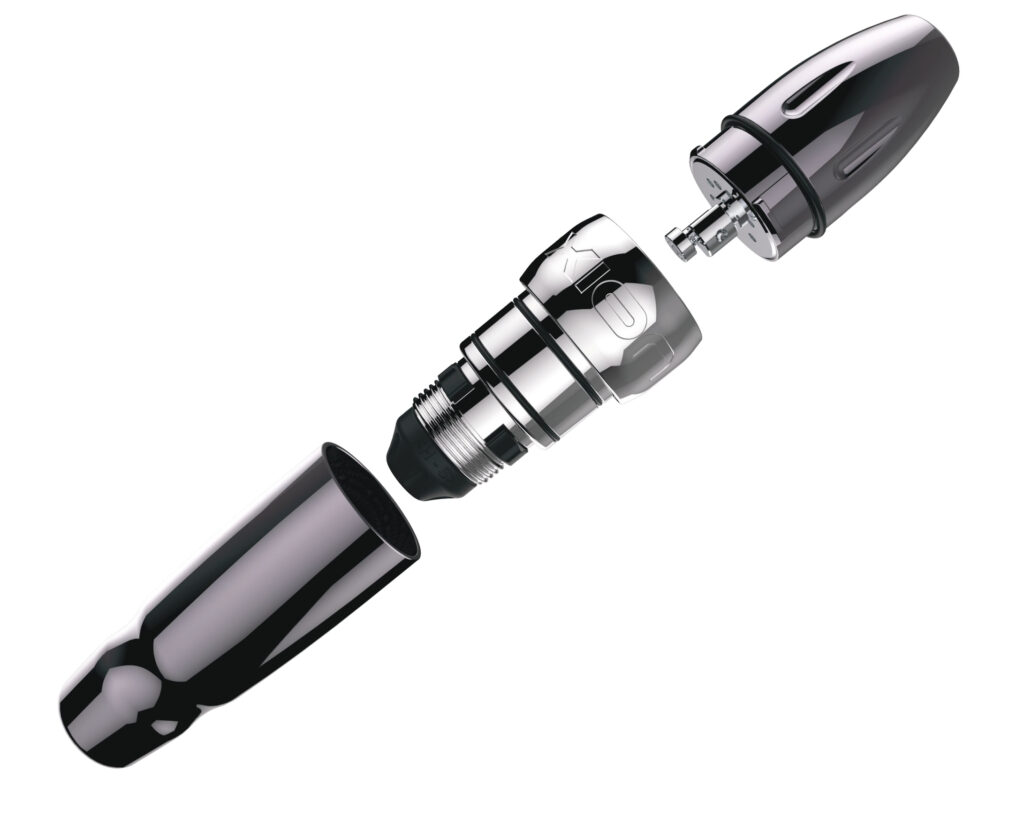
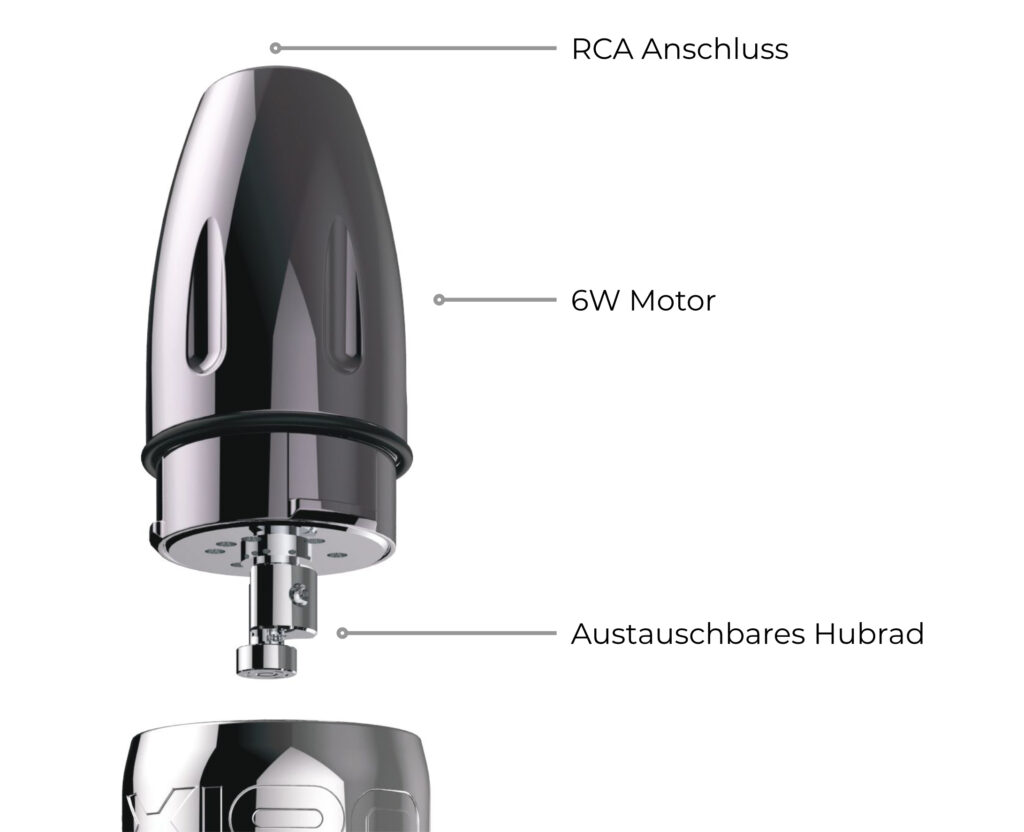
Motor Construction in Tattoo and PMU Machines
A motor in tattoo and PMU machines consists of several key components that work together to move the needle:
- Rotor: The rotating part of the motor that drives the needle.
- Stator: The stationary part of the motor that generates the magnetic field.
- Coils: Copper wires that turn the rotor.
- Bearings: Ensure the smooth rotational movement of the rotor.
– Housing: Protects the motor's internal components.
How the Motor in Tattoo and PMU Machines Works
The motor works through the interaction of electricity and magnetism:
- Electricity flows through the coils: an electric current generates a magnetic field.
- A magnetic field drives the rotor: It sets the rotor in motion.
- Movement is transferred to the needle: Linear motion deposits the pigment into the skin.
Characteristics of a Motor in Tattoo and PMU Machines
- Rotational Speed (RPM): The speed at which the needle moves.
- Torque: The force generated by the motor.
- Power Consumption: Motor Efficiency.
- Operating noise: Noise produced by the engine.
– Heat generation: The production of heat during operation.
Summary
The motor in a tattoo or PMU machine is the core component that drives the needle. The most important characteristics of a motor—speed, torque, power consumption, operating noise, and heat generation—determine the quality and efficiency of the machine.