
Skin Types

Supplement to Dermatology
Skin type refers to the skin's water and oil content.
In general, the following skin types can be identified
- normal skin
- oily skin
- dry skin
- Combination skin
- sensitive skin
Normal Skin
- Not too dry, not too greasy
- no or very few uneven spots
- not very sensitive
- small pores
- fair complexion
Normal skin is the ideal skin type, but it is quite rare. Moisture (water and sweat) and oils (sebum, lipids) are in balance. The natural protective acid mantle is intact.
This skin type absorbs the pigment well during semi-permanent makeup procedures and requires little maintenance.

Oily Skin
Oily skin is usually easy to spot.
- Depending on the severity, it may be shiny, have large pores, or even appear pale.
- Oily skin can often be prone to blemishes (from pimples and blackheads to early-onset acne).
Due to increased production of oils (sebum, lipids), this skin type should not be overburdened during skincare.
Combination Skin
Combination skin is common. Nearly a quarter of the population has it. It can be dry or normal in some areas and oily in others.
The so-called T-zone (forehead, nose, and chin) often has enlarged pores and oily areas caused by increased sebum production.
However, the skin on the cheeks is often dry and rough.
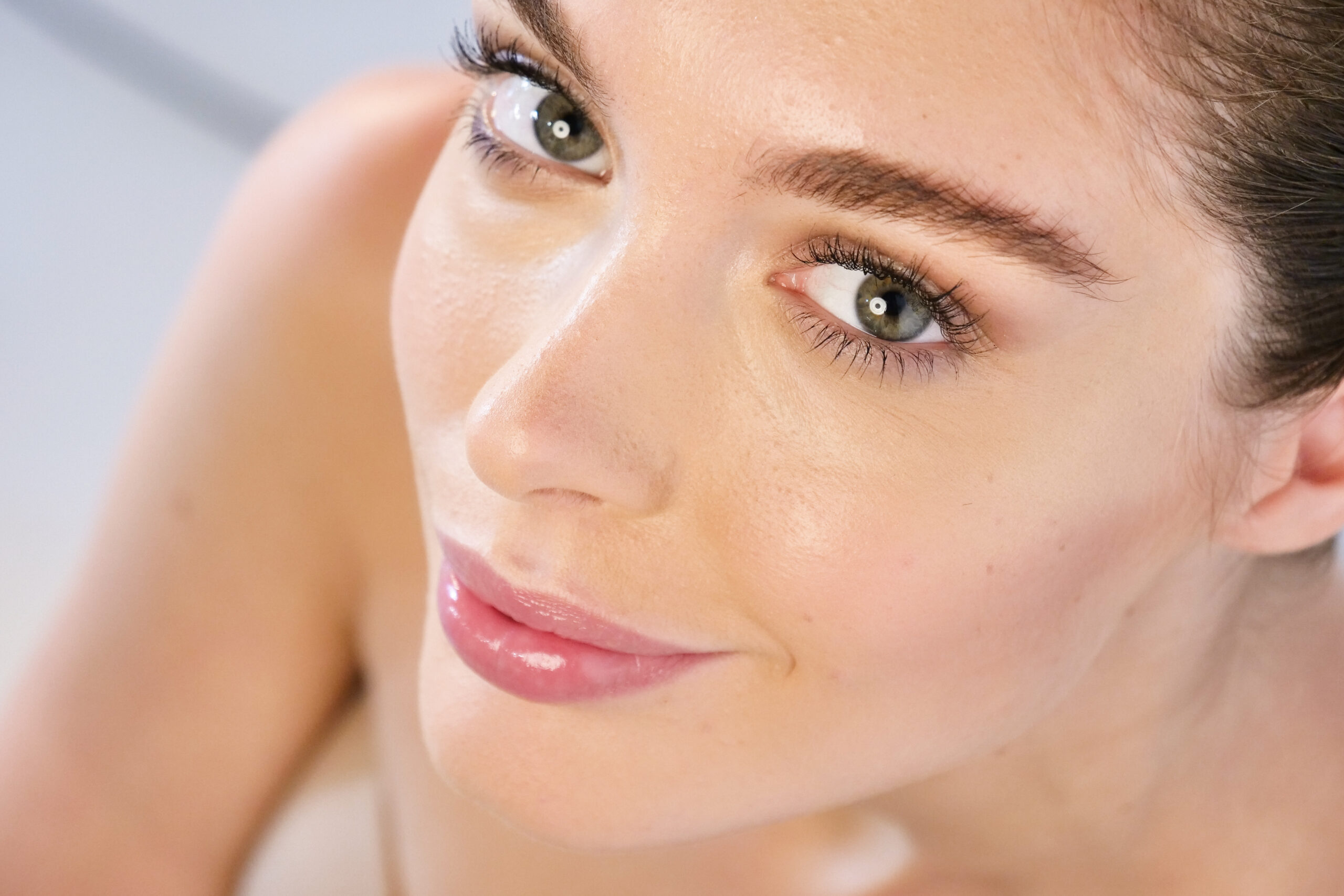
Sensitive Skin
Sensitive skin is different from normal skin.
This sensitivity is either inherited or has developed as a result of living conditions.
A visible sign might be, for example, redness or flaking of the skin.
Those affected often mention a feeling of dryness or tightness.
Sensitive skin is particularly prone to dryness and requires a lot of care (especially in the winter due to cold, dry air).
